Tag Archive for: development

Academic Excellence for Student-Athletes: Mastering Time Management During the Season

When fixtures pile up, assignments cluster together, and travel days eat into revision time, many student-athletes start to feel the pressure.

It is not a question of commitment. Most dual-career athletes are highly motivated. The challenge is not effort, it is structure.

This month, the ProWell Athlete Development Programme focuses on academic excellence and time management for student-athletes. Not generic study advice. Not motivational slogans. But practical systems designed specifically for athletes balancing performance and education.

Because succeeding in both football and academics does not happen by accident. It happens by design.

Why Academic Structure Matters for Dual-Career Athletes

Football seasons are unpredictable. Fixtures change. Recovery demands shift. Performance expectations remain high.

On the flip side academics are not flexible. Deadlines arrive regardless of match schedules.

Without the right systems in place, athletes can fall into one of two patterns:

  • Overworking in panic mode before deadlines

  • Sacrificing recovery to “catch up”

Neither leads to sustainable performance.

Academic excellence for student-athletes requires evidence-based study strategies, intelligent scheduling, and the ability to recognise when to push and when to pause.


1. Evidence-Based Study Strategies for Student-Athletes

Not all study time is equal.

Many students believe longer hours equal better results. Research consistently shows that how you study matters more than how long you study.

Within ProWell, athletes are introduced to strategies such as:

  • Active recall instead of passive re-reading

  • Spaced repetition to improve long-term retention

  • Focused study blocks aligned with energy levels

  • Deliberate review sessions following lectures

For student-athletes, efficiency is everything. Training demands reduce available hours. Study methods must maximise retention in less time.

Academic excellence is not about cramming. It is about consistency.

2. Managing Deadlines During Fixture Congestion

The busiest academic periods often overlap with the most demanding stages of the football season.

Fixture congestion, travel, recovery sessions, and performance preparation can quickly disrupt study routines.

This month’s module teaches athletes to:

  • Map assignment deadlines against fixture calendars

  • Identify “pressure weeks” in advance

  • Front-load work before heavy match periods

  • Build buffer days for unexpected changes

The key principle is simple:
Anticipate pressure before it arrives.

When athletes plan proactively, deadlines stop feeling overwhelming and start feeling manageable.

3. Procrastination vs Strategic Rest

This is one of the most important distinctions for high-performing athletes.

Procrastination looks like:

  • Avoiding work due to discomfort

  • Distracting yourself without intention

  • Waiting for motivation to appear

Strategic rest, however, is different.

Strategic rest:

  • Is planned

  • Supports recovery

  • Protects mental clarity

  • Improves long-term productivity

Dual-career athletes must learn that recovery applies to academic performance too. Burnout does not improve grades or match performance.

Understanding this difference allows athletes to rest without guilt and work without avoidance.

4. Practical Organisation Techniques That Actually Work

Time management is not about filling every hour. It is about creating clarity.

Within ProWell, athletes apply practical techniques such as:

  • Weekly planning sessions

  • Task prioritisation systems

  • Digital calendar integration for training and academic schedules

  • “Two-task focus” rules to avoid overload

When athletes see their week clearly, decision fatigue reduces. Confidence increases. Stress levels drop.

Organisation is not restrictive it is freeing.

5. Creating a Personal Academic Performance Plan

Every athlete is different.

Some thrive under structure. Others need flexibility. Some are naturally organised. Others need guided systems.

This month, athletes create a personalised academic performance plan, tailored to:

  • Their course demands

  • Their training schedule

  • Their peak energy windows

  • Their long-term goals

The aim is not perfection. It is sustainability.

Because football development and academic success are not competing priorities. When managed correctly, they reinforce one another.

Why This Matters Beyond the Classroom

Academic discipline builds:

  • Decision-making skills

  • Accountability

  • Emotional regulation

  • Long-term thinking

These qualities transfer directly to football performance.

At UNIPRO, development is holistic. Structured academic systems sit alongside structured football training, supported by a framework that recognises the reality of being a student-athlete in a high-performance environment.

There are no shortcuts to excellence but there are better systems.

Supporting the Whole Athlete

This month’s ProWell focus reflects a simple belief:

If we expect student-athletes to perform like professionals on the pitch, we must equip them with professional habits off it.

Academic excellence is not separate from performance. It strengthens it.


Want to learn more about how ProWell supports student-athletes throughout the season?

Explore how UNIPRO integrates football development, education pathways, and structured wellbeing support designed for ambitious student-athletes and their families.


If there were shortcuts in football development, everyone would take them.

Players would find the fastest route to the next level. Parents would choose the programme that guaranteed results. Academies would be producing professionals at record speed.

But football doesn’t work that way—and deep down, most families already know it.

The problem? Knowing it and acting on it are two different things.

Real development isn’t built on quick wins or bold promises. It’s built on time, structure, consistency, and the right environment. At UNIPRO, we believe that understanding this early is one of the most important steps a student-athlete can take.

Why Shortcuts Feel So Tempting

Football is an emotional journey. Players feel constant pressure to progress. Parents want reassurance their child is on the “right” path. Social media shows overnight success stories without the years of work behind them.

In that environment, it’s easy to be drawn to:

  • Promises of rapid progression
  • Claims of guaranteed exposure
  • One-off showcases presented as turning points

The problem isn’t ambition—ambition is essential. The problem is when ambition meets unrealistic expectations instead of a sustainable plan.


What ‘No Shortcuts’ Actually Means

Choosing development without shortcuts doesn’t mean lowering your standards or slowing progress.

It means:

Focusing on long-term improvement, not short-term validation
Understanding development is individual, not linear
Accepting setbacks are part of growth, not signs of failure

At UNIPRO, we measure development by how players improve over time—technically, tactically, physically, and personally—not by how quickly they reach a label or title.

The Foundations of Real Football Development

While no two players are the same, genuine development environments share common foundations:

1. The Right Environment
Progress happens when athletes train in professional, demanding, and supportive spaces. Quality coaching, appropriate competition, and clear expectations matter far more than hype.

2. Consistency Over Intensity
One exceptional week doesn’t change a player. Months of consistent training, learning, and reflection do. Sustainable routines always outperform short bursts of effort.

3. Individual Pathways
There’s no single route to success in football. Players develop at different speeds, physically and mentally. Programmes must adapt to the individual, not force athletes into rigid systems.

4. Education That Reduces Pressure
When education is part of the pathway—not a distraction—athletes play with more confidence. They’re free to develop without feeling every match defines their future.

This balance is central to UNIPRO’s philosophy: football ambition supported by meaningful academic progression.

Why Education Matters More Than Many Realise

Here’s the reality: only a small percentage of players progress into full-time professional football.

That doesn’t make the pursuit less valuable—it makes preparation more important.

Strong educational pathways:

  • Provide long-term security
  • Develop decision-making and discipline
  • Prepare athletes for careers within or beyond sport

At UNIPRO, education isn’t a fallback. It’s a core part of the development process, helping student-athletes build futures with confidence and clarity.


What Progress Really Looks Like (Beyond the Highlights)

True development is often quiet.

It shows up as:

  • Better decision-making on the pitch
  • Improved consistency, not just standout moments
  • Greater professionalism in preparation and recovery
  • Increased confidence handling pressure and setbacks

These changes may not trend on social media, but they’re what coaches, universities, and clubs value most over time.

Why UNIPRO Is Built the Way It Is

UNIPRO was created to offer a pathway that respects the reality of football development.

We don’t promise outcomes. We provide:

  • Structured football programmes
  • Flexible, recognised education pathways
  • Support systems that help athletes manage challenges on and off the pitch

Through a holistic approach—including mindset and wellbeing support—athletes grow not just as players, but as people prepared for life beyond football.


Choosing the Right Pathway

There are no shortcuts—but there are better questions.

Families who take time to understand how development really works are far more likely to choose environments that support long-term success. Whether that future remains in football or evolves beyond it, the goal is the same: progress with purpose.


Thinking About Your Next Step?

If you’re exploring football and education pathways and want an honest conversation about development, structure, and long-term planning, UNIPRO is here to help.

Learn how UNIPRO supports student-athletes on and off the pitch—without shortcuts.


GIS Partners with UNIPRO to Offer Flexible Online Degree Pathways for Footballers

The Global Institute of Sport (GIS) is proud to announce a new partnership with UNIPRO International Football Academy, a UK-based academy that combines elite-level football development with education for international student athletes. This collaboration gives footballers the chance to study online while continuing to train and compete at a high level.

Flexible Online Degrees for Footballers

Through this partnership, GIS will deliver its online undergraduate degrees in Sports Management and Football Coaching to UNIPRO players. This approach provides a balanced pathway for both sporting and academic development, helping players gain a recognised university qualification alongside their football career. UNIPRO players will also be able to join GIS’ students from around the world who are studying online and on-campus in stadium-based campuses in Miami, Brussels and Sydney at its iconic global sports summit study tours to the UK, USA, Canada and Australia.

Supporting Footballers On and Off the Pitch

UNIPRO supports international footballers by providing opportunities to train in a professional environment while pursuing academic goals. Its programmes, which include degree pathways, gap-year experiences and full-time football development, focus on nurturing well-rounded athletes who thrive both on and off the pitch.

Dr Mike Walsh, Provost of GIS, said, “This partnership with UNIPRO is a fantastic step forward in supporting the dual careers of aspiring athletes. At GIS, we are committed to helping students develop both their sporting ambitions and their academic potential. By delivering our online degrees to UNIPRO players, we are giving them the tools to build sustainable futures beyond their playing careers.”

Geraldine Jackson, CEO of UNIPRO International Football Academy, added, “At UNIPRO, we believe education and football should work together, not in competition. Our mission is to give student-athletes the flexibility and opportunity to pursue both. To study, train and grow without limits. Our partnership with GIS strengthens that vision by allowing our players to earn a world-class degree while continuing their football development. Together, we’re shaping the next generation of athletes who are not only technically excellent, but also resilient, educated, employable and ready for life beyond the pitch.”

Geraldine Jackson, UNIPRO CEO

About UNIPRO

Founded in 2022, UNIPRO International Football Academy offers international student athletes the opportunity to study, train and live in the UK. The academy provides a range of flexible programmes, including training-only pathways, in-person or online degree study options and gap-year experiences. UNIPRO is led by CEO Geraldine Jackson alongside Director of Football Paul Dickov, the former Manchester City and Scotland striker.                                

GIS’s Commitment to Athlete Development

This partnership reflects GIS’s mission to support athletes in achieving excellence both on and off the field. By combining high-quality, flexible online degree programmes with UNIPRO’s professional training environment, GIS helps players build knowledge, skills and career opportunities for life after sport. The collaboration underscores GIS’s commitment to developing the next generation of sports leaders and professionals while ensuring athletes can pursue their passions without compromise.

Sleep, Rest Days & Performance Gains

When people talk about high performance in football, they usually focus on how hard you train, how many hours you spend on the pitch, or how intense your gym sessions are. But here’s the truth: real progress happens during recovery.

Muscle repair, mental reset, energy restoration—that’s the work your body does when you stop pushing and start recovering. And if you don’t take recovery seriously, all that hard training can quickly lead to burnout, fatigue, and injury.

So let’s break down one of our ProWell topics, why recovery matters and how to build a better regime around sleep, rest and routine.

Why Recovery Matters  More Than You Think

Football is physically demanding. Sprinting, tackling, pressing, decision-making—your body and brain are under constant pressure. Without proper recovery, performance drops, reaction times slow, and your injury risk skyrockets.

You don’t get stronger during training—you get stronger during recovery.

Training breaks your body down. Recovery builds it back up stronger.

That means:

  • Muscle fibres repair and grow

  • The nervous system resets

  • The immune system gets a boost

Neglecting recovery—especially with the added pressure of uni deadlines, exams, or travel—leads to chronic fatigue, poor sleep, lower mood, and eventually, overtraining.

Sleep: The Most Underrated Performance Tool

Sleep isn’t just about feeling rested—it’s when your body does some of its most important work.

During deep sleep, your body releases human growth hormone (HGH), which:

  • Repairs muscle tissue

  • Builds stronger bones and tendons

  • Restores your energy reserves

How Much Sleep Do Athletes Need?

  • 18–22-year-olds: Aim for 7–9 hours a night

  • During heavy training periods: Add an extra 30–60 minutes where you can

Poor Sleep? Here’s What That Can Look Like:

  • Slower reaction time and decision-making

  • More injuries (athletes who sleep less are almost twice as likely to get hurt)

  • Mood swings, increased anxiety, lack of motivation

How to Build a Better Sleep Routine

Here are five small changes that can make a big difference:

  1. Stick to a consistent bedtime and wake-up time. Even on weekends

  2. Avoid screens an hour before bed. Blue light affects your melatonin levels

  3. Keep your room cool, dark and quiet. Ideal temp is 18–20°C

  4. Establish a pre-bed routine. Read, journal, stretch, or use breathing exercises

  5. Limit caffeine after 2pm and skip heavy meals late at night

Bonus tip: Try keeping a sleep journal or use a fitness tracker to spot patterns.

Active Recovery vs. Full Rest

Recovery doesn’t mean doing nothing. In fact, active recovery can help your body flush out waste, reduce soreness, and speed up muscle repair.

Great active recovery ideas:

  • Light cycling or swimming

  • A walk outdoors

  • Mobility or yoga sessions

  • Foam rolling and stretching

  • Contrast therapy (hot/cold showers or baths)

The key is to keep it low intensity and restorative.

Plan Your Rest and Recovery Days, Don’t Leave Them to Chance

Balancing football, academics, social life, and downtime is hard. But training without rest won’t help you improve. It just leads to plateaus or injury.

Schedule at least 1–2 full rest days each week, depending on how hard you’re training.

Signs you’re under-recovering:

  • Constant soreness or stiffness

  • Your performance drops despite more effort

  • Poor sleep, irritability, or loss of appetite

Remember: Rest isn’t lazy. It’s part of the plan.

Nutrition & Hydration: Recovery Starts in the Kitchen

To fully recover, your body needs fuel and the right kind.

  • Protein: 1.6–2.2g per kg of body weight for muscle repair

  • Carbs: Replace what you burn in training (glycogen stores)

  • Omega-3s: Fight inflammation and support recovery

  • Water: At least 2–3L per day—more if you’re training or sweating heavily

Sample recovery meal:Train smarter

  • Grilled chicken, quinoa, and steamed broccoli

Quick option:

  • Whey protein shake, banana, and a handful of almonds

Don’t Forget Mental Recovery

It’s not just your body that needs a break. Your brain does, too.

Mental fatigue leads to poor decisions, low motivation, and emotional exhaustion. That’s why taking mental breaks is just as important.

Try this:

  • Guided meditation or breathwork

  • Journaling before bed

  • Spend time with friends away from football

  • Put the phone down 30–60 minutes before sleep

Mindful downtime helps with stress regulation, better sleep, and mental clarity.

Final Word: Make Recovery a Habit, Not an Afterthought

At UNIPRO, recovery is part of the plan not something we add when we’re tired.

If you want consistency, you need sustainability. That starts with giving your body and mind the space to rebuild, refocus and come back stronger.

So next time you think about skipping sleep or squeezing in one more session ask yourself:
Am I training smarter, or just harder?

Need help or want to learn more about how you can improve your performance off the pitch; join our ProWell Athlete Development Programme. The waiting list is open now!

Train Smarter, Not Just Harder: Injury Prevention for Footballers

Injury prevention isn’t just a medical concern, it’s a strategy that should be incorporated into your routine and taken a seriously as training. For aspiring footballers, the ability to stay fit, train consistently, and recover effectively is what allows you to improve, compete, and reach your full potential.

At UNIPRO, we believe in proactive prevention. That means teaching athletes how to move well, condition smart, and respect recovery as part of their training, not something that comes after as a result of an injury or is a second thought.

This blog explores the core principles of injury prevention and how they apply to student-athletes balancing university commitments with elite-level training.

Why Injury Prevention Matters in Football

Football is a high-intensity sport involving rapid acceleration, deceleration, changes of direction, physical contact, and explosive movement patterns. These demands put footballers at risk of injuries such as:

  • ACL tears
  • Hamstring and groin strains
  • Ankle sprains
  • Stress fractures
  • Tendonitis

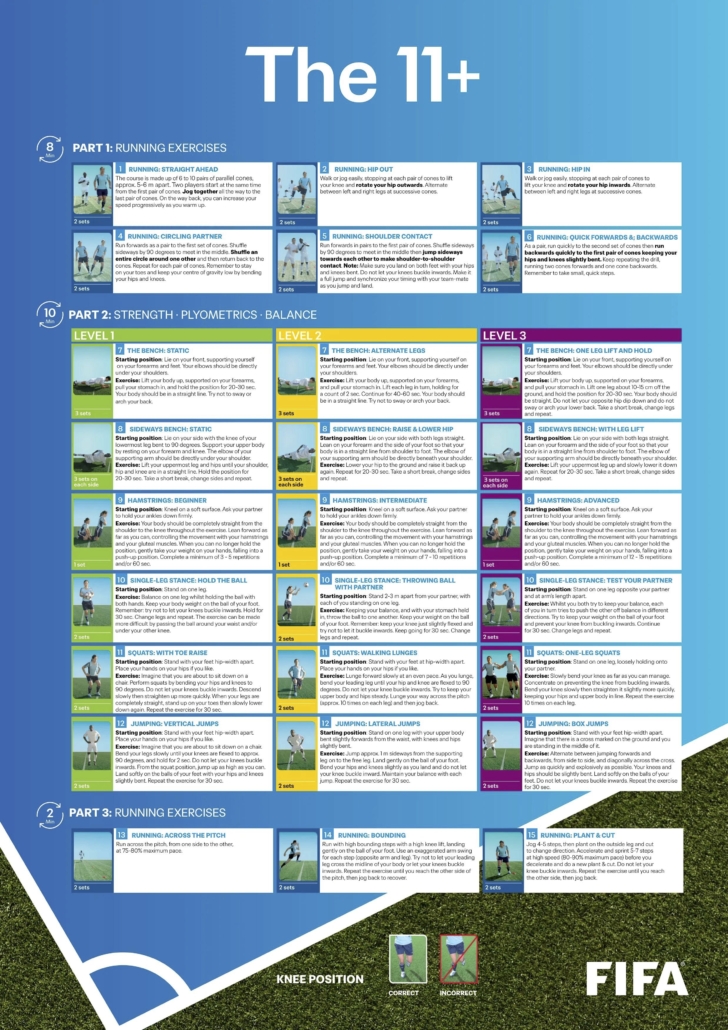
But research shows that up to 70% of common football injuries are preventable with structured warm-ups, strength and conditioning, movement education, and proper recovery strategies (for example, teams executing the FIFA 11+ warm-up programme, a structured sequence of running, strength, plyometric and balance exercises have been shown to sustain 30–70% fewer injuries)

Injury prevention

The 9 Pillars of Injury Prevention for Footballers

  1. Dynamic Warm-Ups & Cool-Downs

A proper warm-up raises your body temperature, improves joint mobility, and prepares your neuromuscular system for action.

Key elements:

  • Leg swings, high knees, lunges
  • Activation drills for glutes and core
  • Ball work and technical drills at game tempo

After training, cool-down with:

  • Static stretches (hamstrings, quads, calves)
  • Foam rolling to promote circulation
  • Light jogging or walking to reduce muscle tension
  1. Football-Specific Strength and Conditioning

A tailored S&C programme builds the resilience needed to withstand the demands of the game.

Focus areas:

  • Lower body strength: squats, lunges, hamstring curls
  • Core stability: planks, anti-rotation holds, stability ball work
  • Plyometrics: box jumps, bounding, landing mechanics
  • Upper body strength: pushing and pulling exercises for posture and contact balanceStrength and Conditioning
  1. Flexibility and Mobility Training

Lack of mobility in the hips, ankles, and thoracic spine is a common injury risk.

Add to your weekly routine:

  • Hip flexor and hamstring stretches
  • Dynamic mobility flows
  • Yoga or guided flexibility sessions once a week
  1. Running Mechanics & Movement Efficiency

Many soft-tissue injuries stem from poor biomechanics. Learning how to sprint, decelerate, and land safely reduces load on joints.

Drills to include:

  • Sprint technique with a slight forward lean and proper knee drive
  • Deceleration drills with focus on knee alignment and soft landings
  • Agility patterns that mimic game movements (Z-cuts, shuffles, pivots)
  1. Load Management & Training Intensity Monitoring

Injuries often result from “too much, too soon.” Overtraining without recovery leads to burnout, fatigue, and breakdown.

Best practices:

  • Track training volume and intensity weekly
  • Schedule rest days and light recovery sessions
  • Listen to your body and adjust based on fatigue, soreness and mood.
  1. Proper Nutrition and Hydration

Muscles, tendons, and joints recover more efficiently when they’re fuelled properly. Nutritional deficiencies can slow healing and increase injury risk.

Nutritional tips:

  • Prioritise protein for muscle repair post-training
  • Carbohydrates are essential for fuelling high-intensity sessions
  • Stay hydrated with 2.7–3.7L of fluid daily, adjusted for activity and climate.
  1. Recovery Strategies: Sleep, Active Recovery, and Soft Tissue Work

Recovery is where adaptation happens. Skipping it compromises progress.

Key components:

  • 8–9 hours of sleep per night
  • Active recovery: low-intensity swimming, cycling, or mobility circuits
  • Soft tissue work: foam rolling, massage, contrast baths.
  1. Injury Awareness and Early Intervention

Ignoring “minor” pain often leads to major issues later.

Early warning signs:

  • Persistent tightness, swelling, or restricted range of motion
  • Decreased performance or chronic fatigue
  • Compensation patterns when moving or running

Always report discomfort early and work with physios or coaches to modify training accordinglyDoc 1. Key Injury Preve…

  1. Mental Preparation and Stress Management

Mental stress increases muscle tension, reduces focus, and impacts movement efficiency making injury more likely.

Injury prevention through mindset:

  • Practice visualisation to rehearse safe, confident movements
  • Use mindfulness to stay focused and avoid reactive play
  • Manage off-pitch stress through journaling or professional support

Building a Smarter Training Plan

At UNIPRO, our injury prevention model is integrated into every part of the programme from strength sessions to tactical drills plus, we dive deeper into the importance of injury prevention in one of our ProWell modules. Here’s a simple template you can apply now:

Weekly Injury Prevention Checklist:

  • 2 strength training sessions (lower + upper/core)
  • 1 flexibility or yoga session
  • Daily warm-up and cooldown protocols
  • At least one full rest day
  • Sleep, hydration, and nutrition targets met

Final Thoughts

Injury prevention isn’t about being cautious, it’s about being consistent. When you train with intention, listen to your body, and prioritise recovery, you build a foundation for a long and successful playing career.

The athletes who stay healthy are the ones who get the chance to improve. And the ones who improve consistently are the ones who get noticed.

Next blog: We’ll turn our attention to nutrition—how to fuel training, boost recovery, and eat like a high-performance athlete.

Finding Your Feet

Moving to a new country, living away from home and starting university life while training like a pro — it’s a lot to take in for anyone.

Add in the high expectations to perform well and stay fit while adjusting to lectures, homesickness, and late-night pasta dinners is a recipe for to feeling lost in and even the most talented players can quickly burn out.

Why Wellbeing Matters

Athletes are under unique pressure: physical expectations, academic responsibilities, social adjustments, and the internal drive to always do more. That why for UNIPRO wellbeing isn’t just a buzzword — it’s the foundation of performance, resilience, and long-term success but what does that look like for our athletes?

At UNIPRO, we teach our student-athletes that performance isn’t just about what happens during a match — it’s also about:

  • How well they sleep.
  • What they’re eating (or not eating) day to day.
  • How they manage stress from deadlines, injuries, or homesickness.
  • Whether they feel supported when things get tough.

This is why Building Strong Foundations is the starting point in our Athlete Development Programme.

Before the football boots go on, before the first lecture starts, and long before matchday adrenaline kicks in — we want to make sure each player knows we are here to support them as a person first.


What Athletes Often Forget

There’s a common misconception in sport: if you train hard and play harder, success will follow. But the reality is more complex.

Many young athletes focus so intensely on physical preparation that they forget about:

  • Mental recovery – Not just muscle recovery, but downtime for the mind.
  • Emotional regulation – Handling disappointment, managing pressure, dealing with self-doubt.
  • Social balance – Making time for friendships, support networks, and life outside football.
  • Academic mindset – Studying for a degree demands focus and organisation, which can be challenging when your body is tired and your mind is on next week’s match.

It’s not selfish to take care of your mental or emotional health — it’s smart. In fact, the most successful athletes are often those who understand how to balance intensity with care. At UNIPRO it is at our core.

How We Support This at UNIPRO

From day one, students are guided through our Foundations of Wellbeing module (one of 9). It covers:

  • Self-awareness – Understanding your triggers, reactions, and strengths.
  • Personal growth – Building habits that support a healthy, balanced life.
  • Goal setting – Clarifying what success looks like for you, on your terms.
  • The Road Map Tracker – A simple but effective way to keep track of progress beyond goals and stats.

Alongside this, every student has regular 1-1 check-ins, helping them reflect, recalibrate, and refocus — whether they’re thriving or just trying to stay afloat.

Our commitment to student wellbeing isn’t just about preventing burnout — it’s about helping young people become strong, reflective, emotionally intelligent adults. The kind who can handle pressure, bounce back from setbacks, and thrive in every area of life

Need to know how we support athlete development off the pitch at UNIPRO?

Get in touch or book a one-to-one discovery call with our team today.

Ready to Learn More? Download our brochure

Target Football
UNIPRO x Benfica Camp 2026